

Remember when Foursquare…
Remember when Foursquare made it completely normal to share your exact location with your friends, all day long?
If you are a millennial, you may remember this app. For those of you who don’t, let me tell you a bit about this app and what makes is significant in product design.
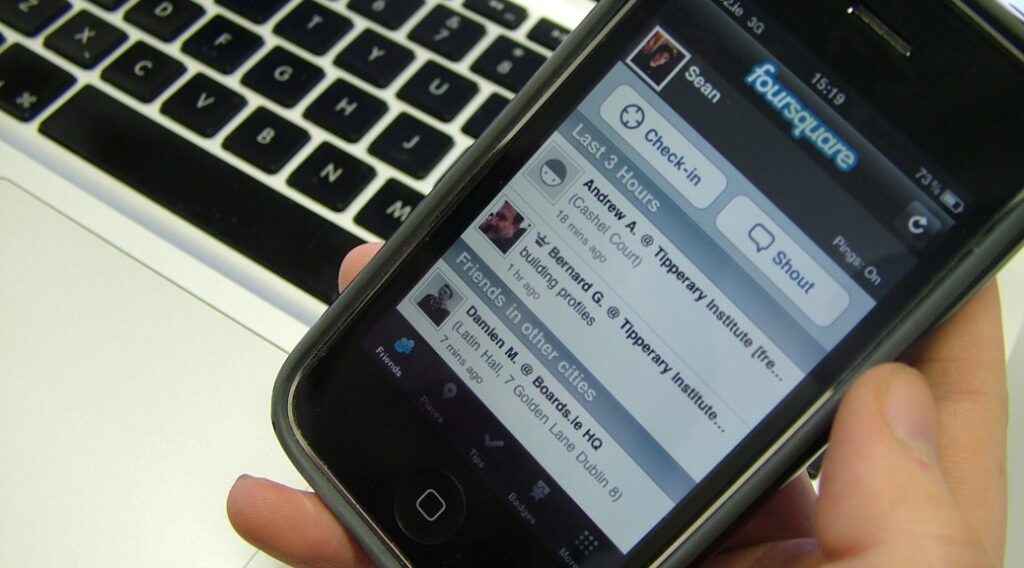
Foursquare was created as a location-based social networking app in 2009. The product had 2 main features:
- Real-time check-ins & sharing, meaning users could check in when they were at a location and automatically share it with their friends.
- Local Discoveries & recommendations, meaning the app provided recommendations of other venues around you based on your past check-ins, likes, and feedback.
What made Foursquare special for me was that they managed to quietly (no, this isn’t an LLM adding the word, it’s me because it really was) convince people that sharing their location was a perfectly normal and safe thing to do. What I forgot until I started researching the normalisation of this obscene idea was that they achieved that by gamification.
I can’t find a source of users in 2009, apart from the fact that they launched the app in SXWM Interactive Festival, which gave them instant momentum. If Notebook & I had to guess, there were around 50,000 early adopters. But then Foursquare went from 1 million users in 2010 to 7 million users by 2011.
The Gamification Part:
So this is how Foursquare works.
- The users check in, then the application verifies and broadcasts a user’s location via GPS.
- Foursquare rewards the check-in with badges, points on a social leaderboard, and prizes. Such as;
- Mayorships: If you checked in to a venue more than anyone else in 60 days, you’d become the ‘mayor’ of that place.
- Badges & points: Checking into a specific type of place at a specific time will unlock certain digital badges
- Leaderboard: The more badges and points you got from checking in, the higher you’d be on the weekly leaderboard.
- Real-world financial incentives: Foursquare cleverly partnered with businesses and started offering free food/drinks for anyone who unlocked a certain digital badge or offers for the current majors of a restaurant.
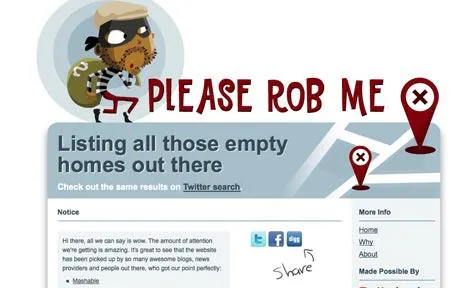
So the only thing I can now look back and make sense of is that Foursquare provided an opportunity to curate a lifestyle amongst friends, and so privacy didn’t matter. That and the lack of our knowledge of how these tech companies could end up using our data. Although in 2010 some Dutch Developers did wake up to the fact that this could do real harm and made a website called PleaseRobMe.com to raise awareness about the privacy dangers of over-sharing location data online.
And I do remember all my friends in Turkey using it, and it made sense because we were a bunch of youngsters at the time that didn’t have anything better to do than jumping from coffee shops to restaurants, bowling to the cinema. And being seen in those venues was cool, so it just wasn’t a big deal to share our location with our friends; on the contrary, it was a reason to meet or a conversation starter…
How did this influence the big players?
Well, Facebook was around then, yes, and Instagram was about to be born…. Facebook was already ‘the’ social network of the time, but only with a web version, because they were still trying to get the mobile version right. And they did not until 2011-2012. So that makes Foursquare being mobile native a little more special.
But Facebook did, of course, steal the location tagging idea, and launched ‘Facebook Places’ and added a prominent “Check In” button on their newsfeed, but left out the gamification.
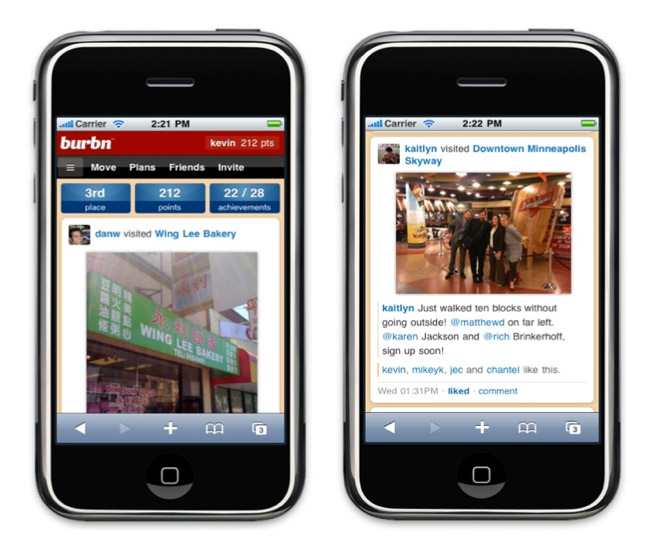
Meanwhile, Instagram was starting as a tiny startup and built a prototype app called Burbn (aha, because of the founders’ love for ‘bourbon’) which allowed users to post check-ins with photos. But being aspiring minimalists, they reworked that concept and stripped everything off to just focus on photographs. This new version was called Instagram.
Millennials vs Gen Z
We millennials were not knowledgeable because, to be fair to us, we were the early adopters for e-very-thing! First mobile phones, flip phones, iPhones, mobile apps, social networks…it’s tiring just thinking about all the stuff we didn’t have, and then suddenly we had to ‘adopt’ ALL of it!
But what is Gen Z’s excuse? Because I came across an article that describes Gen Z as being ‘addicted’ to location sharing. No wait, what? I had no idea? Did you?
According to this article from Macleans.ca, the 20-something-year-olds are constantly sharing their locations on Apple / Find My (which I don’t mind as much), Snapchat’s Snap Map, and Instagram. At least, though, they’re sharing it with whomever they choose. I quote:
“Surveillance has become our default mode. My boyfriend and I share ours on Snapchat, and I’m not even really sure why. It could be because TikTok convinced us it’s what serious couples do—#relationshiprules posts frequently list location sharing as non-negotiable.
This habit didn’t come out of nowhere. On Foursquare, an app popular in the mid-2010s, users could tag themselves at specific locations. And people have casually tagged locations on Instagram for years—a bar, a restaurant or a beach halfway around the world. This is meant to brag about status, or to connect through shared places. Eventually, it became normal, even comforting, to be findable. Sharing our locations in real time, 24/7, just feels like the next step.”
And that brings us back to Foursquare…
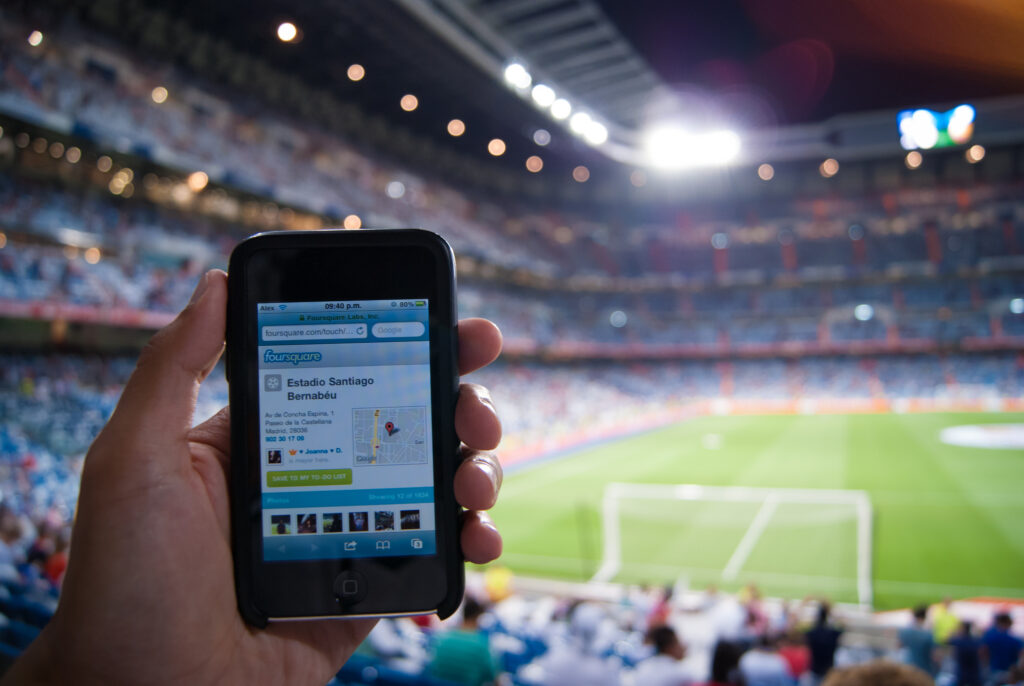
So, whatever happened to Foursquare?
They eventually flatlined in 2013 (I’m surprised they lasted that long!) Cleverly co-founder Dennis Crowley turned the app in 2 new apps.
- Swarm, dedicated to just checking & gamification
- Fourquare City Guide, no games but a competition to Yelp reviews.
They eventually flatlined in 2013 (I’m surprised they lasted that long!) Cleverly co-founder Dennis Crowley turned the app into 2 new apps.
- Swarm, dedicated to just checking & gamification
- Fourquare City Guide, no games but a competition to Yelp reviews.
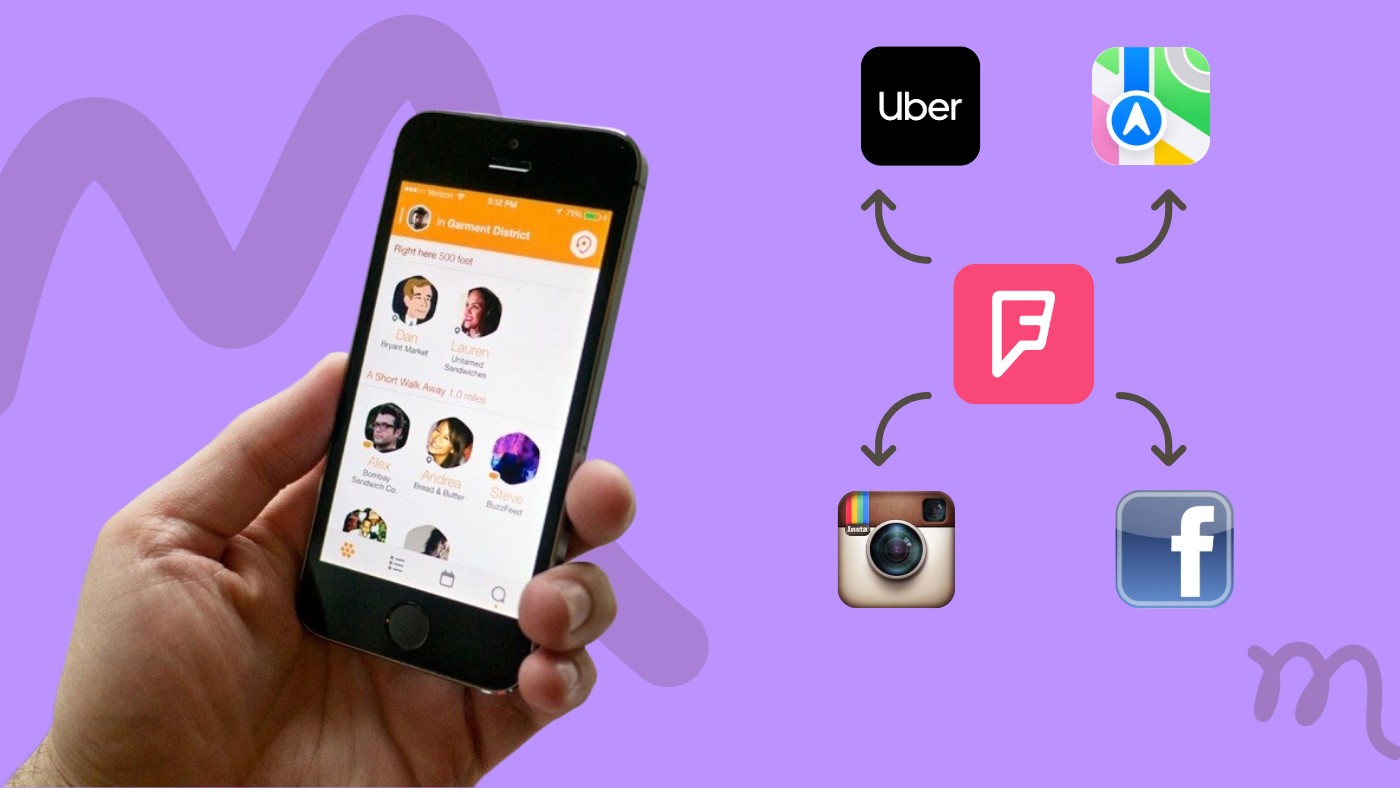
But it backfired with users, so after realising the goldmine they’ve been sitting on, they launched Pilgrim SDK, powered by machine learning. It’d analyse a phone’s Wi-Fi signals, Bluetooth and GPS, and could accurately log when a user walked into a venue. And this became the engine of Uber and Apple Maps… and even Snapchat bought their data.
Because Foursquare kept a massive panel of millions of users who explicitly opted in to allow 24/7 background tracking in exchange for smart local recommendations and had successfully mapped precise GPS coordinates to actual brick-and-mortar business boundaries
So here we are literally at a time where we now know data is king. Data is what these tech giants sell us stuff and make their money. The more intimate details we share, the more agency we give them… and it is so hard to predict where they’ll go…
So maybe we should take a beat when we are being forced to ‘adapt’ to all these new AI tools, pouring our hearts and ideas into these LLM’s, sharing our faces, voices, and making them the centre of our work?
So maybe we should take a beat when we are being forced to ‘adapt’ to all these new AI tools, pouring our hearts and ideas into these LLM’s, sharing our faces, voices, and making them the centre of our work?
Disclaimer: This article is fully written by me, the human. I used an LLM only during research to gather resources and specific answers. Although I had quite a bit of back-and-forth with Gemini and Notebook for facts, the writing is solely mine. All grammar errors are my own and were not fed to an LLM for corrections; all resources are listed below.
- https://analoggamestudies.org/2015/01/bodily-transgression-in-gamified-spaces/
- https://www.theguardian.com/technology/blog/2010/jul/12/geolocation-foursquare-gowalla-privacy-concerns
- https://cdt.org/insights/over-sharing-and-location-awareness/
- https://www.britannica.com/money/Instagram
- https://slidebean.com/story/what-happened-to-foursquare
- https://macleans.ca/society/technology/why-gen-z-is-addicted-to-location-sharing/
- https://www.wired.com/story/you-may-have-forgotten-foursquare-it-didnt-forget-you/
- https://news.ycombinator.com/item?id=14052444
- https://analoggamestudies.org/2015/01/bodily-transgression-in-gamified-spaces/


Leave a Reply