


How IxDF Helped Me Turn Experience into Expertise
After 15 years in design, I still struggled to feel ‘legit’ in UX. Here’s how that changed.
When I first started designing websites back in 2005, nobody was calling it UX. In fact, the term didn’t really exist in our circles. I designed sites for actors, writers, and small theatres (mainly in WordPress). Back then, websites needed to tell a story, they had to have a cool idea, do something different from the others, and reflect the brand or owner’s work. So I had to get curious. I hunted down JavaScript libraries and effects, and negotiated with developers to make them happen.
But my real passion was branding, so I didn’t give it much thought at the time.
I even took an HTML course because my aunt said, “Digital is the future. You should learn this.” I didn’t learn to code –nothing really stuck– but I did learn the code language. I started to know where to look for tags, what a <div> was, where to change the colours, sizes, fonts. Most importantly, I understood developers better, which made communicating and planning with them easier. This gave me leverage in comparison to most designers at the time. Not a total waste! Thank God.
I worked in branding agencies, yet website requests kept following me. Then, over a decade into my career, after branding, social media management, art direction, and so on, I found myself in a specialist WordPress agency as a web designer. I moved into a design director role, and by then, “UX” was becoming more of an industry term.
When we hired a newly graduated UX designer, I started to understand the difference between a web designer and a UX designer. I learned a lot from them and started paying attention to different aspects of the design process.
After another promotion, I was told I’d be the “UX Director”. My first internal reaction was: “But I’m a Creative Director, not UX.” I wasn’t formally trained in UX. I was a graphic designer by education. And suddenly, after so many years in the industry, I was wrestling with imposter syndrome. That lack of confidence was uncomfortable to live with.
So I started looking for something that could improve my skillset…
Self-validation, building confidence, one course at a time
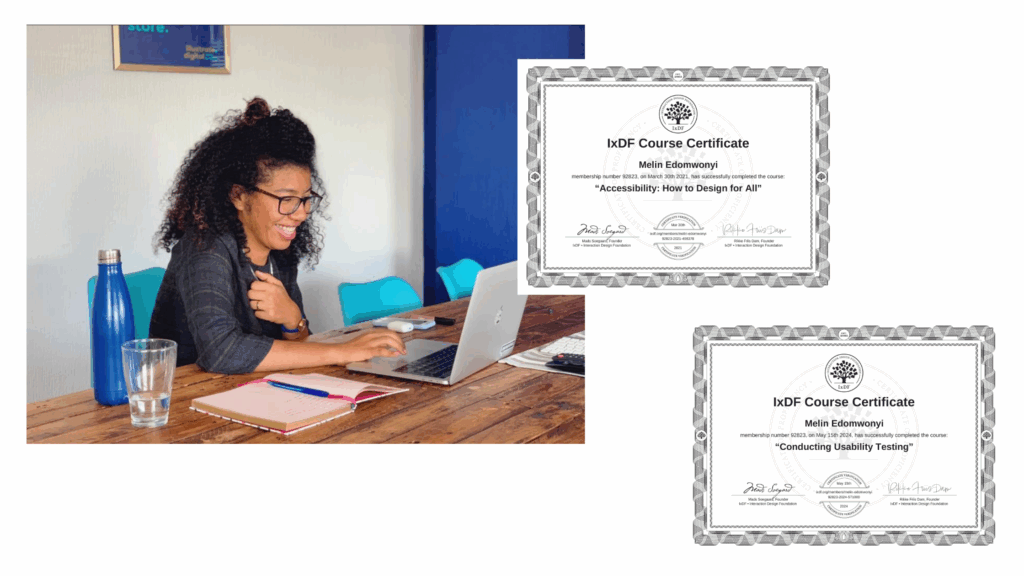
The first course I signed up for was Accessibility: How to Design for All. That one challenged me more than I expected. It was very technical, but absolutely essential. I realised accessibility wasn’t an optional extra. It had to be core to my practice. That shift changed the way I thought about UX entirely.
Shortly after, I parted ways with the WordPress agency, feeling deflated and like a failure. I wasn’t seen as a UX professional. Worse, I hadn’t been given the chance or the support to evolve into my role. It was a classic story: an intuitive designer with years of hands-on (very hard) work, now struggling to validate herself in a field that seemed to require credentials and jargon — a lot of jargon.
And as a woman in tech… let’s be honest. That doesn’t make things easier.
So I made a decision. I went looking for a way to rebuild my confidence, validate my knowledge, and fill in the gaps I hadn’t had a chance to explore. That’s when I went back to the Interaction Design Foundation.
The first big shift: Usability Testing and User Research
The first course I took was Conducting Usability Testing. It was practical, eye-opening, and empowering. I’d been designing for web for years, but I had never been given the chance to do user research or testing. The people questioning my competency hadn’t even considered what we were really missing in our process. I was adamant: I wanted to practise UX properly and not just on the surface.
My next course was User Research Methods and Best Practices. (The best part? You pay once and get access to all the courses and masterclasses.) Slowly, I built my confidence. I learned the language, the right processes, and the importance of usability. I restructured my knowledge and experience. It was like rewiring my brain, re-learning, re-discovering.
These courses weren’t about ticking boxes. They were about deepening the value I could offer. The knowledge helped me land freelance work with major organisations, like conducting user testing for a large UK university education service. I also found myself a mentor in user testing to stretch those muscles further. I’m grateful for his support and kindness and for never making me feel like I was lacking.
The confidence to lead and share
More than anything, putting these certifications on my LinkedIn felt like a quiet revolution. It may sound superficial, but after being doubted, having that visible credibility boosted my self-belief massively. And I wasn’t faking it, I had the practice and principles to back it up.
Recently, I took AI for Designers. Not because I was clueless about AI, but because I wanted to stay in tune with where the field was heading. That course gave me tools to speak about AI with confidence, but also taught me something more important: how to critically assess the ethics behind the tools we use.
Learning became about more than skills. It became a way of seeing design in a wider, more human context.

Now, I mentor women like me
These days, I get a lot of one-to-one requests – especially from women – asking how to move from graphic or brand design into UX. I tell them the truth: you probably already know more than you think. But if you want structure, confidence, and community, start with IxDF.
I recommend it because it works. The tasks are practical. The course content is accessible (I have ADHD, and having videos with transcripts and articles has been priceless for my challenging brain to learn). The assignments are marked by real professionals. And the projects help you build an actual portfolio.
I’ve taken so many masterclasses now I’ve lost count. Some favourites:
- Human-Centred Design for AI
- How to Design for Neurodiversity
- Inclusive Design: Build Inclusion into Your Design Process
- Ethics in Design
I’ve still got some in the pipeline (UX Strategy, anyone?), and I plan to finish Design for a Better World by Don Norman, just to soak in the wisdom of someone who helped shape this field.

Never stop learning, even after 20 years in the field
My motto is simple: Never Stop Learning.
Why? Because it’s not just about learning new things. Sometimes it’s about:
- Validating what you already know
- Refreshing what you forgot you knew
- Exploring something from a new perspective
- Building the language to advocate for better design — especially when you may be the only one championing it
IxDF gave me tools, structure, and confidence. But more than that, it gave me a sense of belonging in a field that had once felt a little out of reach. Now, I don’t just do UX. I lead it, I teach it, and I help others believe they can do the same.
Wondering If You Can Pivot to UX? Here’s My Advice
If you’re reading this and wondering how to transition into UX, start small. Find a course that speaks to you. Test the waters. Build your understanding one step at a time.
You probably already know more than you think. But having the right tools, structure, and language makes all the difference.
And remember: we should never stop learning. That’s what keeps us relevant as designers. That’s what keeps us human.
Want to talk UX? I’d love to connect.
Whether you’re in branding and looking to pivot, or just want to swap stories about accessibility, AI, or inclusive design, reach out. Let’s talk about your journey.
Oh and if you want to start your UX journey, start here ✨

Leave a Reply